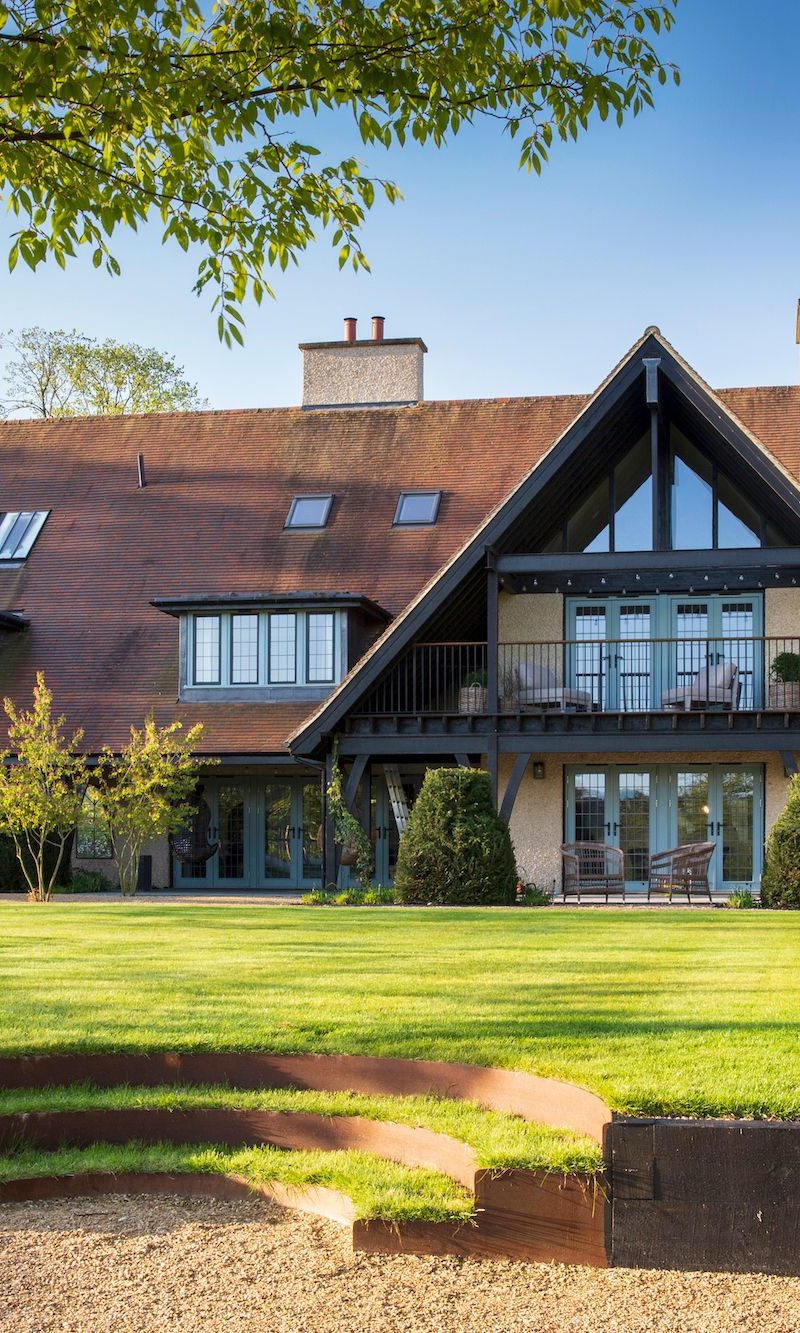
Contemporary Barn Garden Design in Oxfordshire
Barn Garden Design Brief
This barn garden design project began with a newly developed property featuring a full-width sandstone patio and a long, narrow lawned plot.
The client’s brief was to break up the garden’s length and create a series of distinct yet cohesive outdoor living zones that improved both functionality and visual appeal. Key requirements included a shaded terrace for relaxation, a contemporary gravel garden with textured seasonal planting, a dedicated pétanque court, and a stylish entertaining area for outdoor cooking and dining.
BEFORE
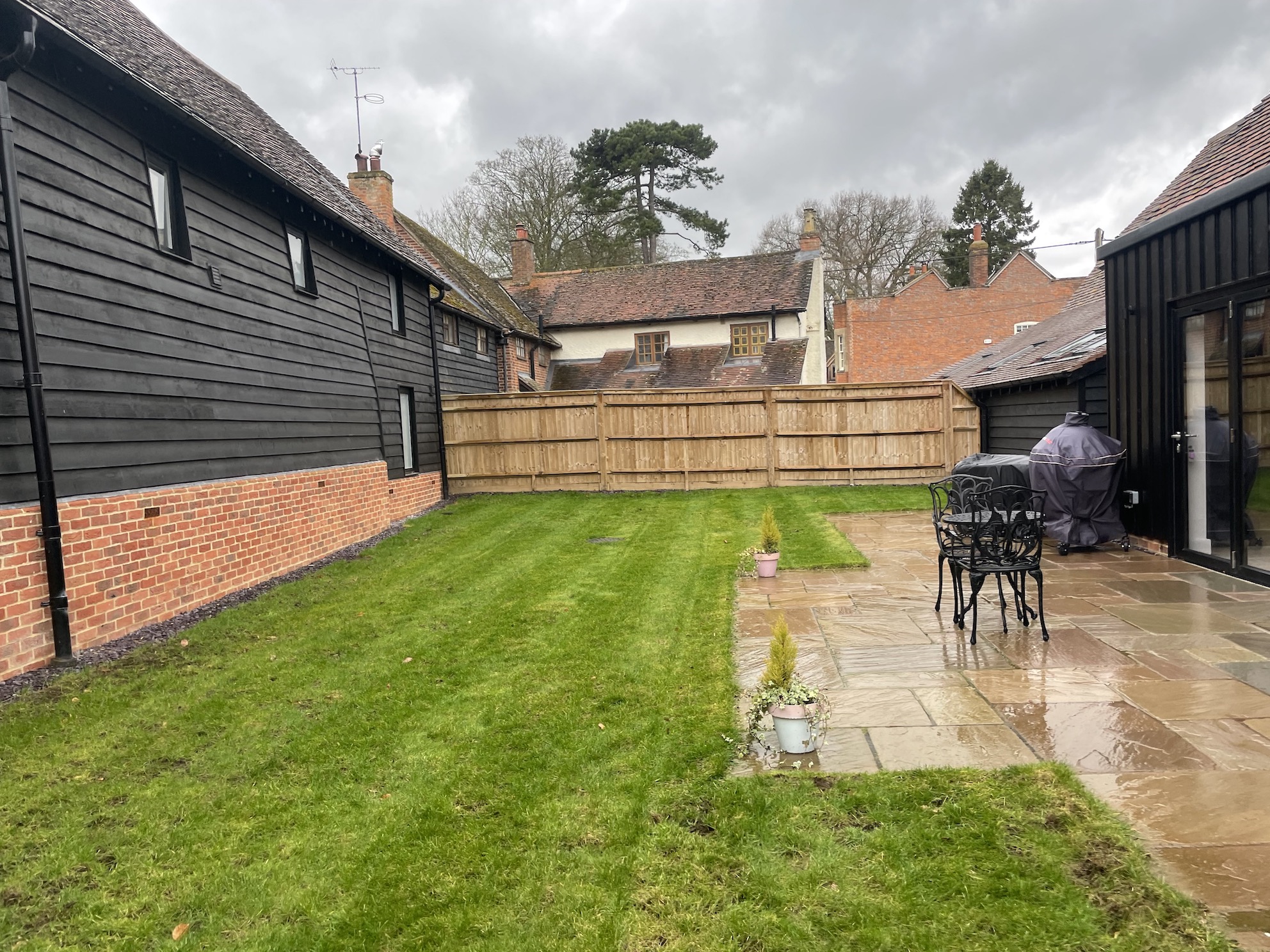
AFTER
Overall Garden Design & Landscaping Strategy
We began by removing extensive hardstanding behind the house, where large areas of paving had dominated the space and limited planting opportunities. Reducing the hard landscaping allowed for generous planting beds to be introduced, softening the rear façade and creating a better balance between the home and garden while boosting biodiversity, seasonal colour, and texture.
The new layout established three connected outdoor zones: a tranquil shade garden with layered planting, a functional dining terrace for entertaining, and a contemporary gravel garden beside the pétanque court for low-maintenance structure. Together, these defined spaces transform the long, narrow plot into a cohesive series of outdoor rooms designed for both relaxation and social living.

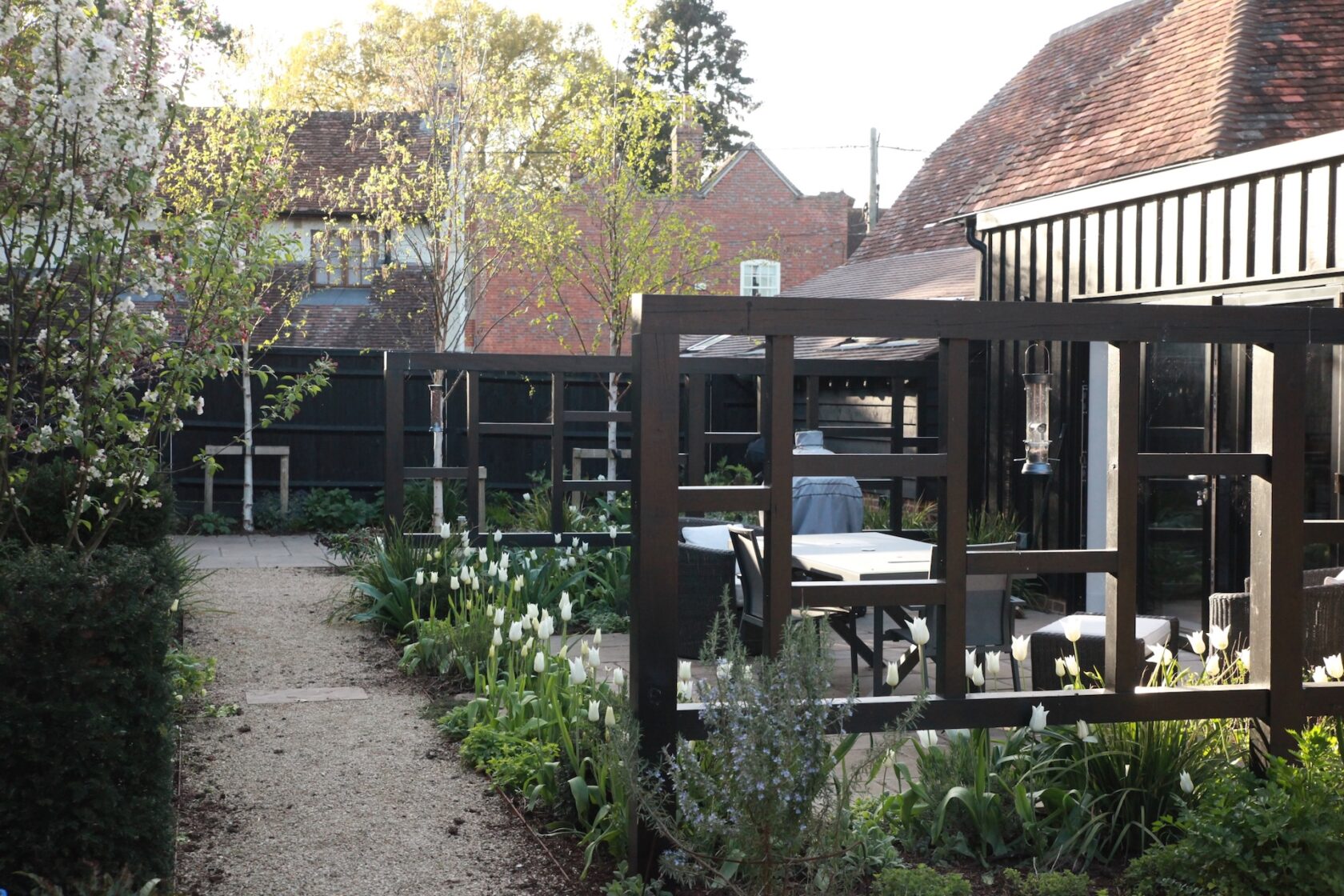
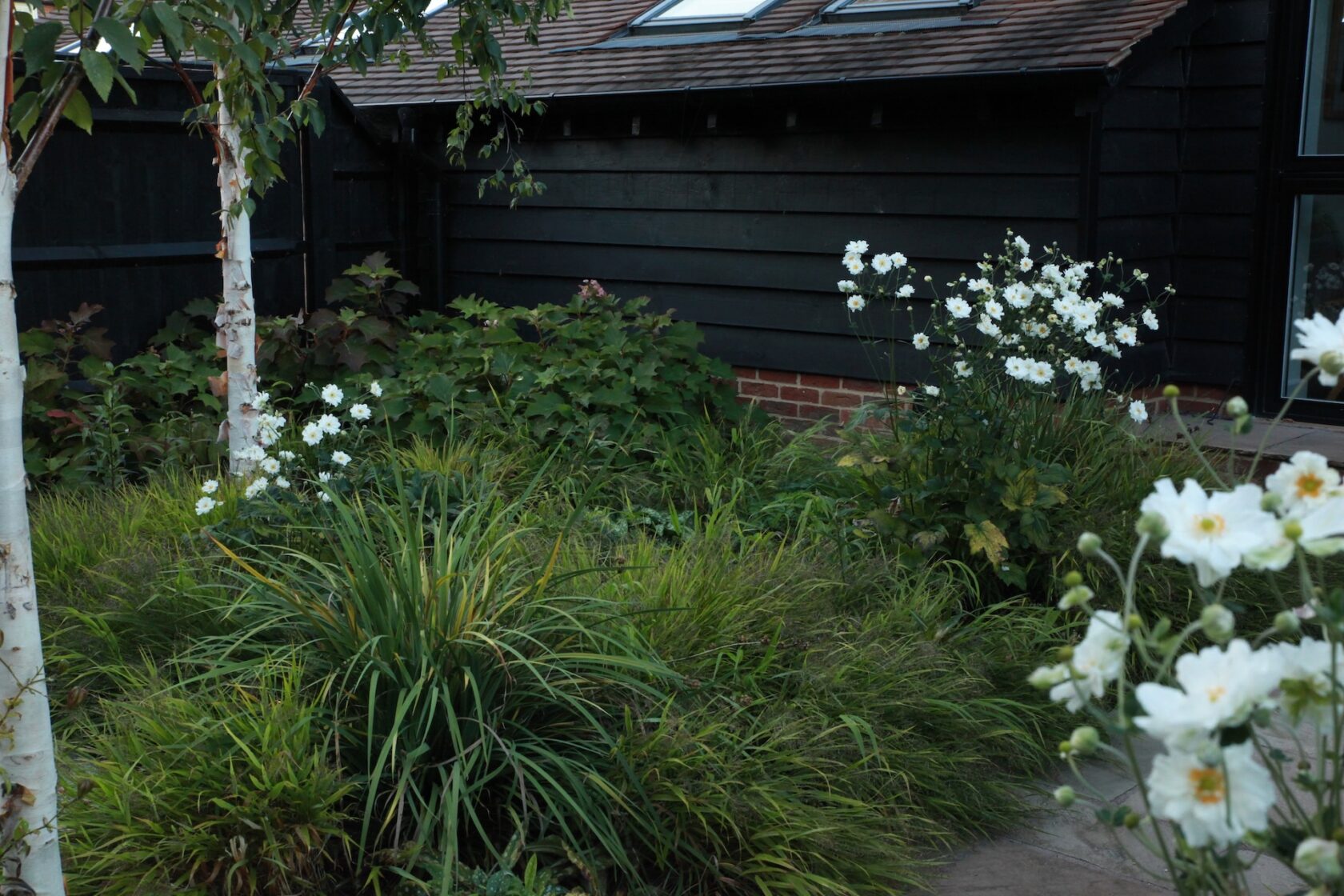
Shade Garden Design with Birch Trees and Seasonal Planting
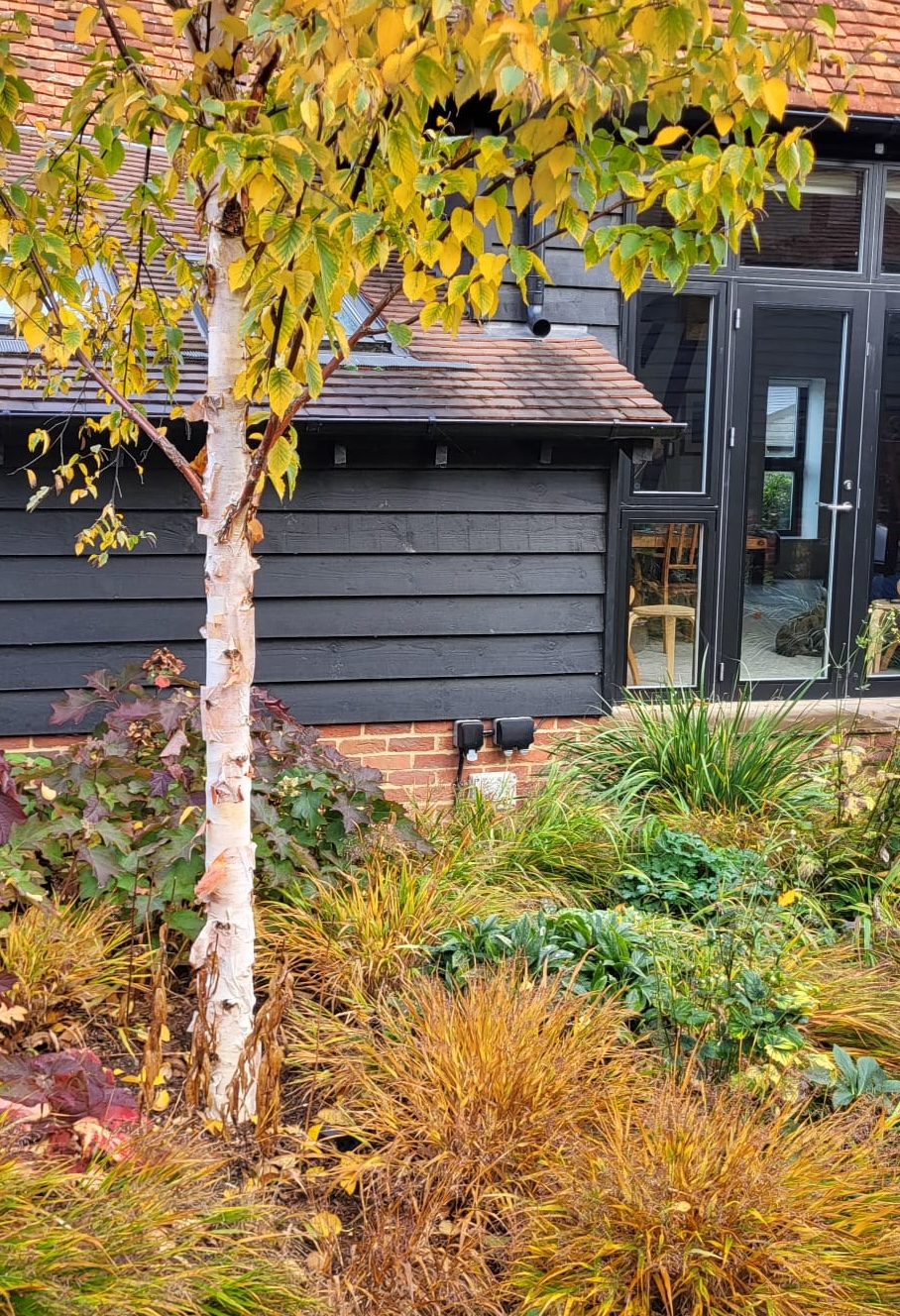
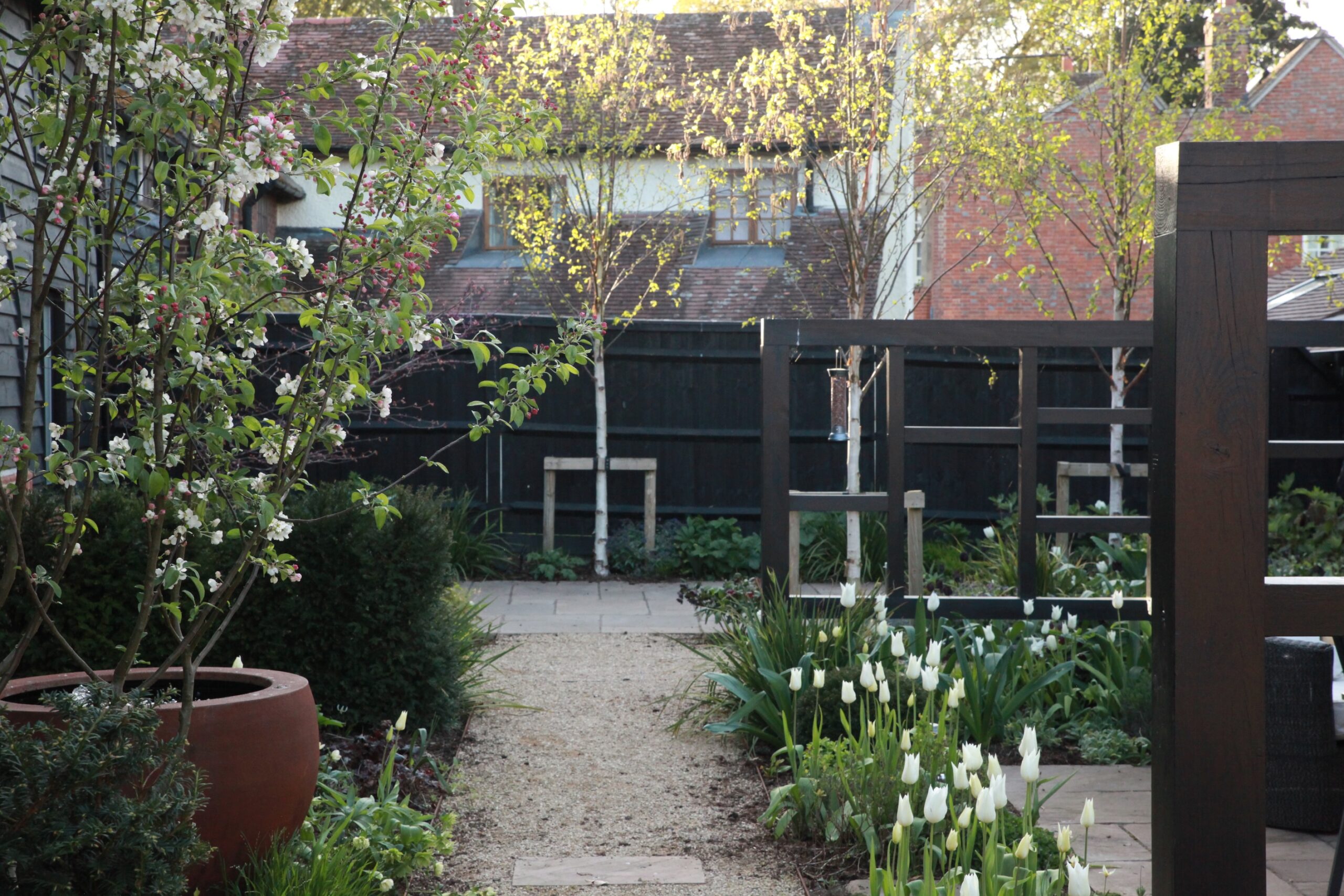
A large proportion of the paving originally lifted around the house was carefully reused to create a beautiful shade terrace, designed as a calm and functional outdoor living space. Three medium-sized birch trees were planted around the terrace to provide elegant structure and create soft, dappled shade during the summer months.
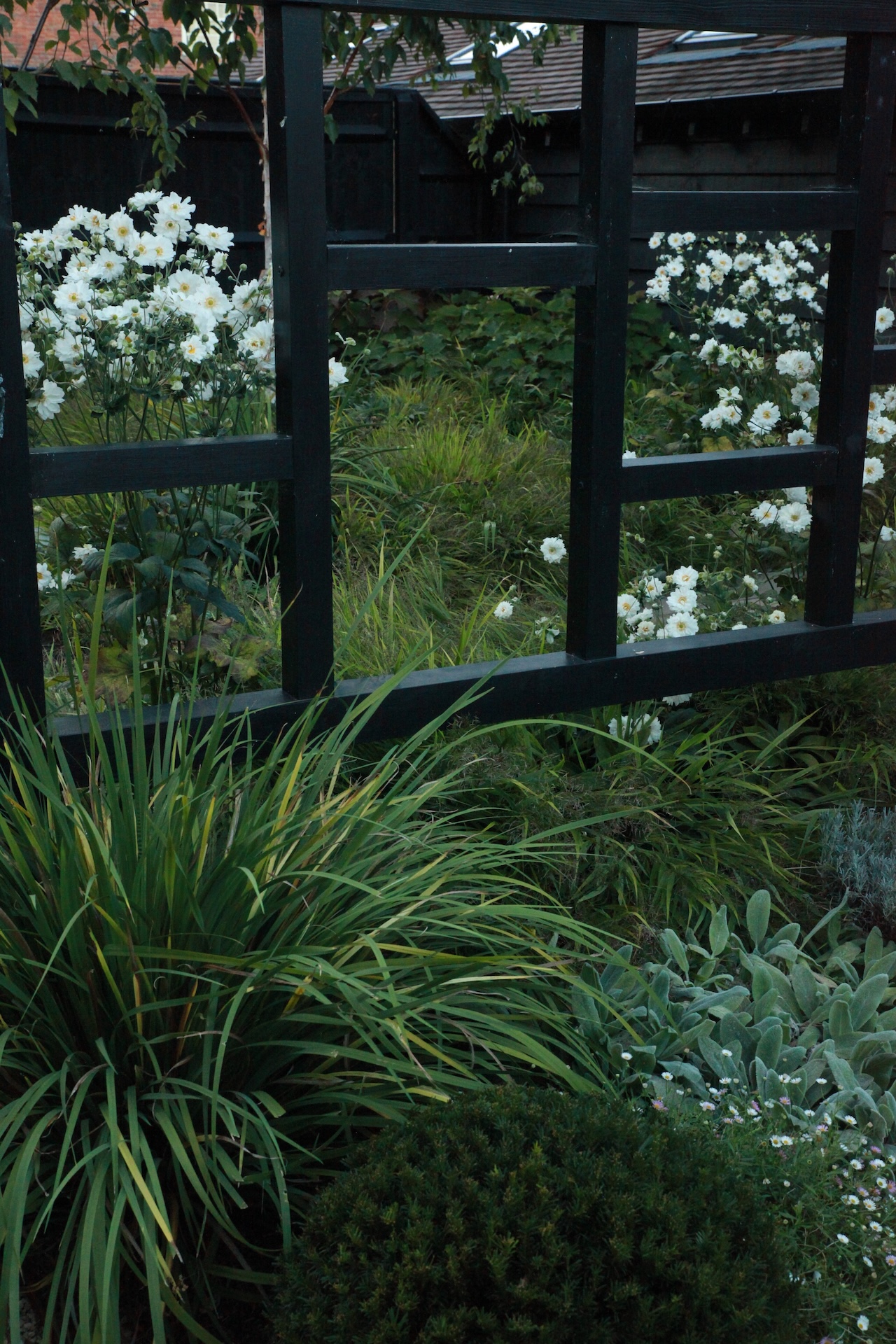
Surrounding the terrace is a bold yet pared-back planting scheme featuring a carefully selected mix of ornamental grasses and shade-tolerant perennials. Key plants include Japanese fountain grass, Libertia grandiflora, Japanese anemones, and oak-leaf hydrangeas, chosen for their texture, resilience, and long seasonal interest.
The strong grass matrix of Hakonechloa ties the shade garden together, creating movement and cohesion, whilst strategic bursts of colour punctuate the space throughout the year. The garden reaches its peak in autumn, when warm tones from the grasses combine with vibrant foliage and flowers. Into winter, evergreen Libertia and structural grasses continue to provide striking contrast, ensuring the shade garden remains visually engaging all year round.

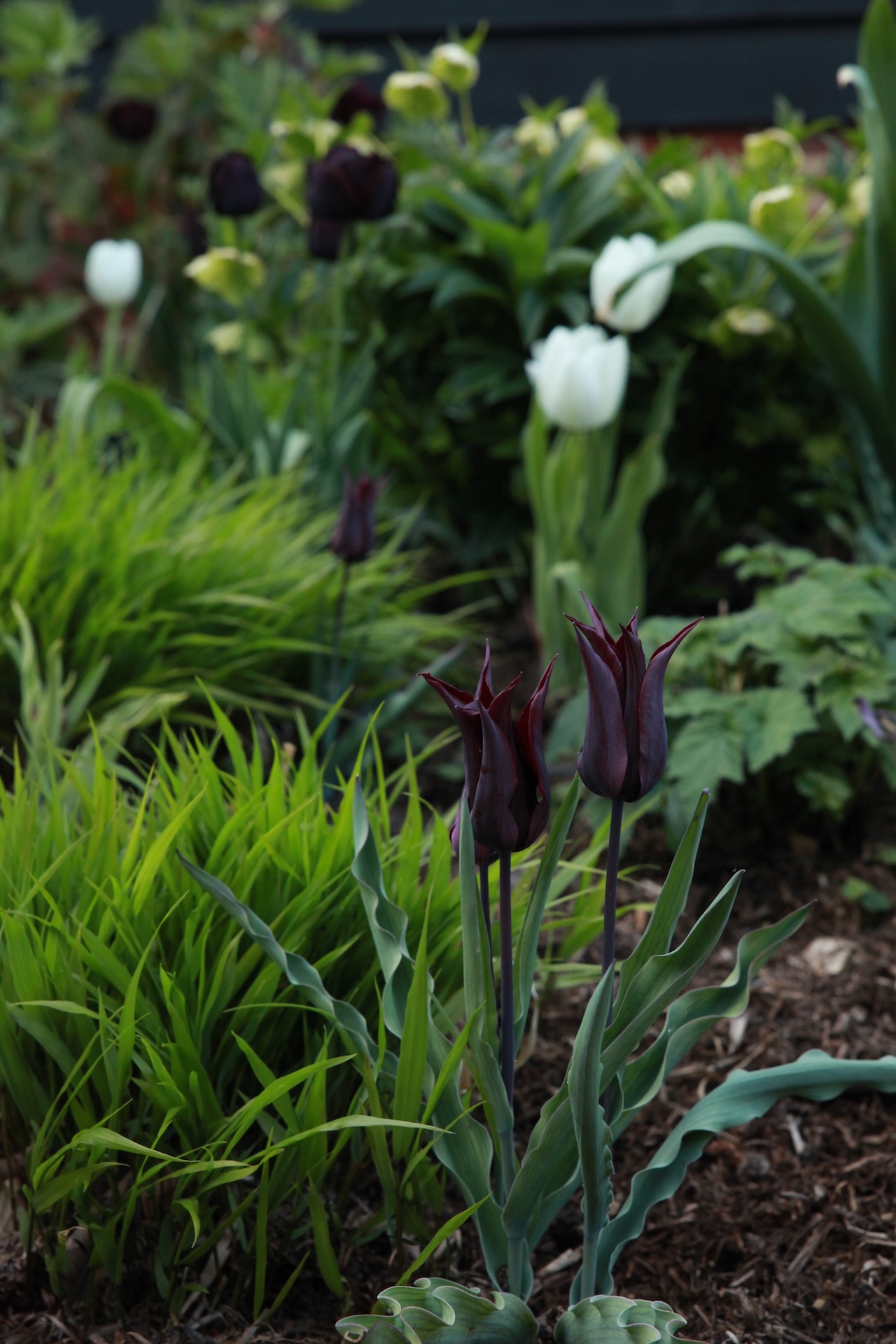
Dining Terrace – Contemporary Outdoor Entertaining Space
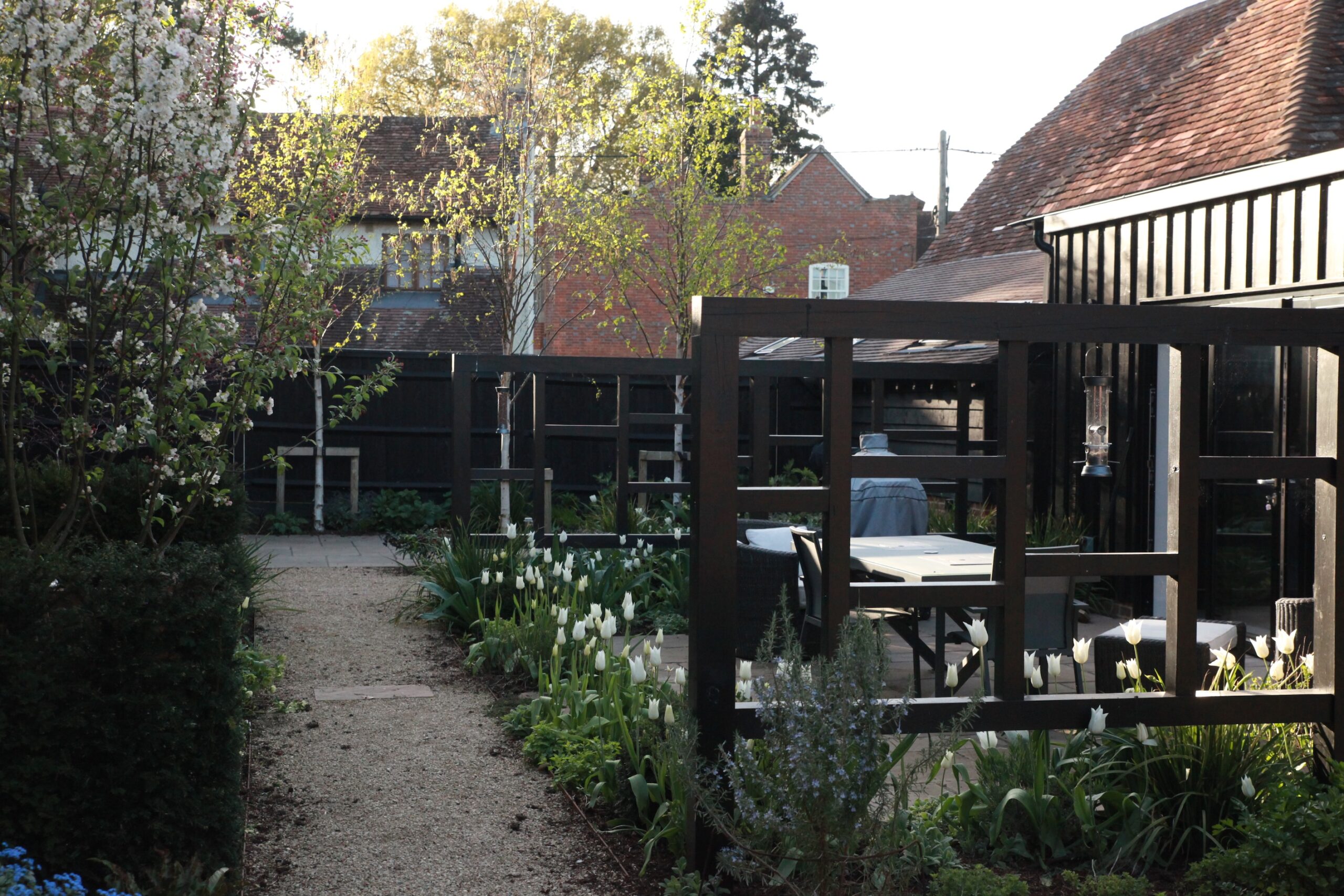
The dining terrace is a central feature of this contemporary garden design, accessed directly from the kitchen via bi-fold doors to create seamless indoor–outdoor living. Designed as both a focal point and practical entertaining area, it provides a strong visual connection from inside the home.
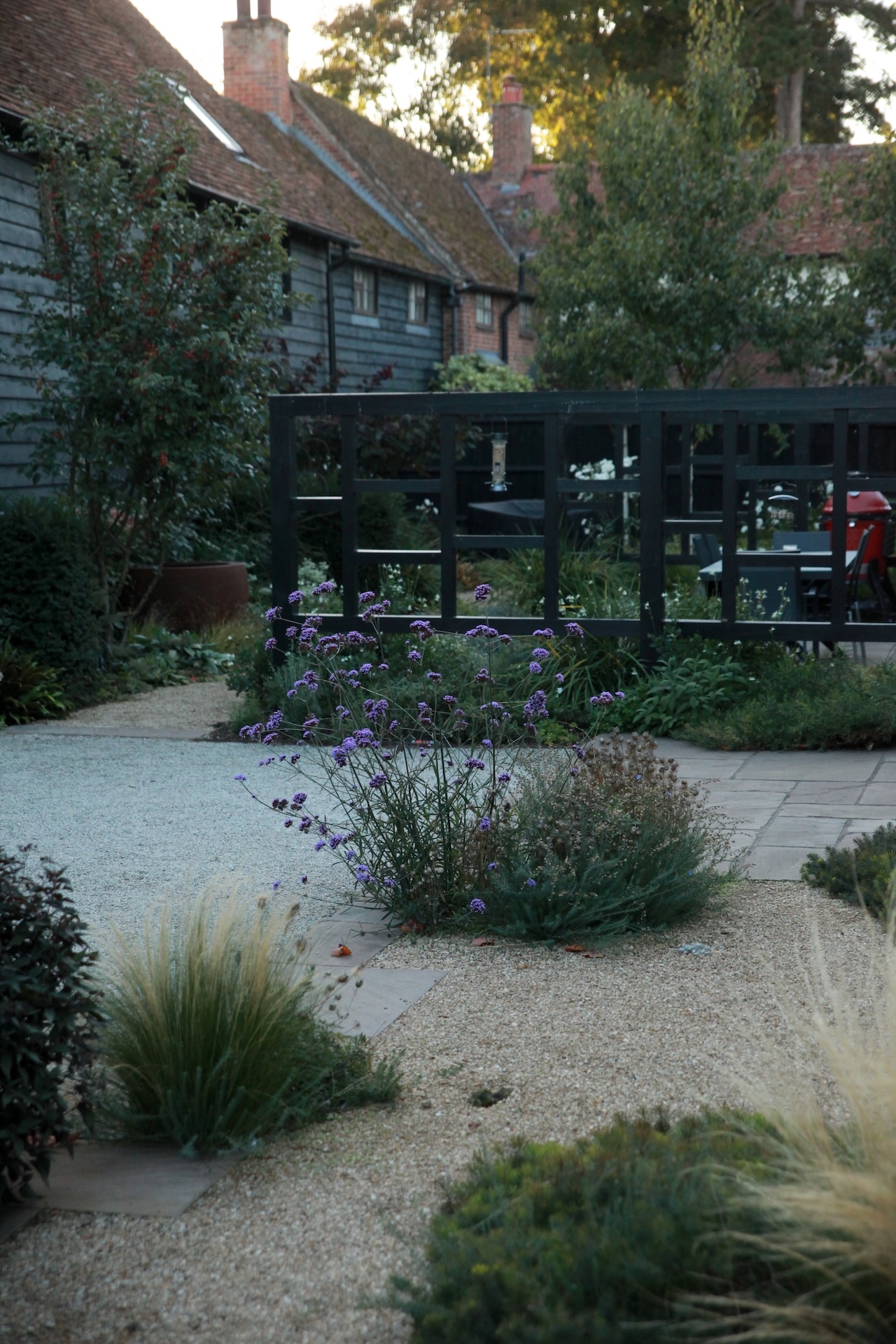
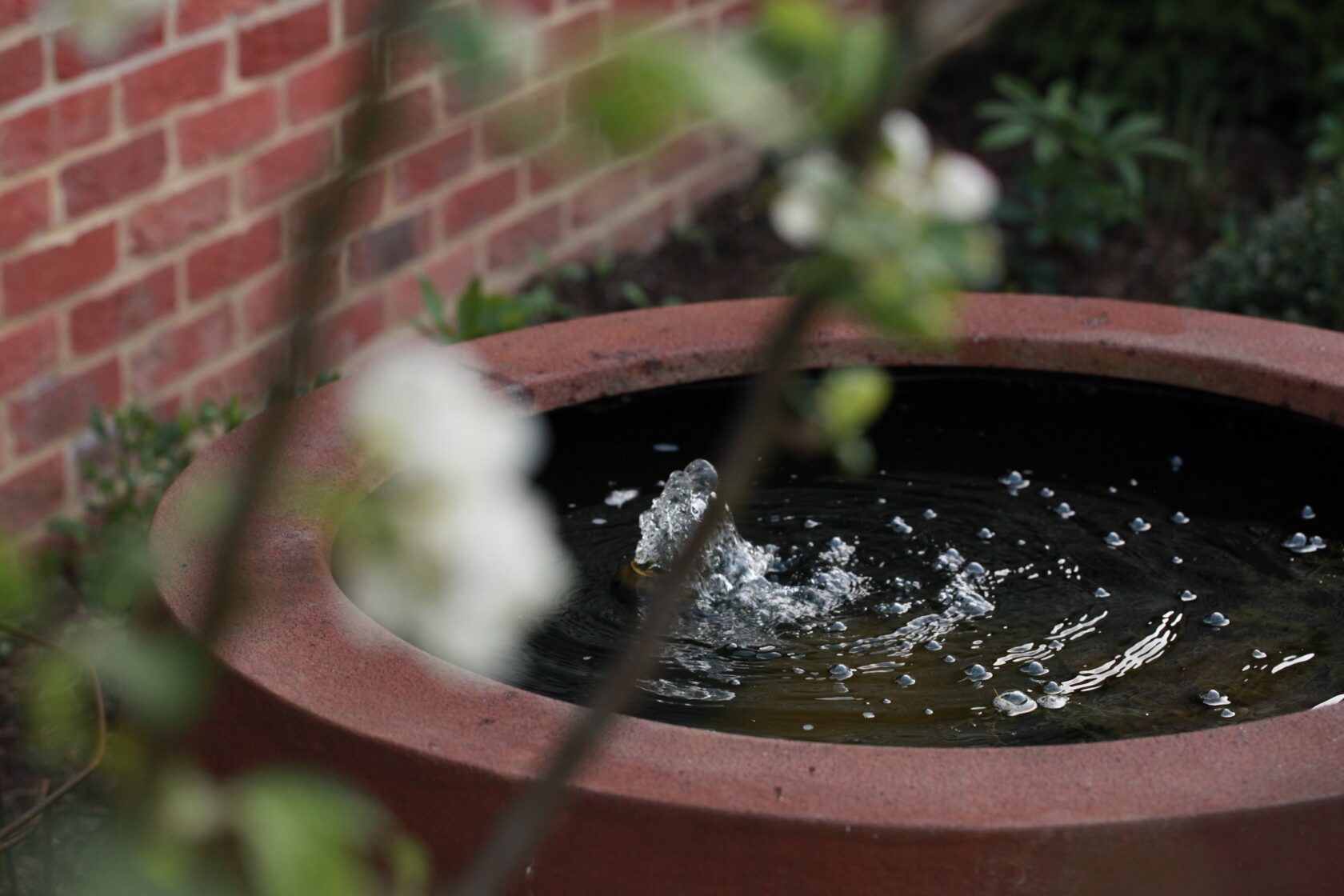
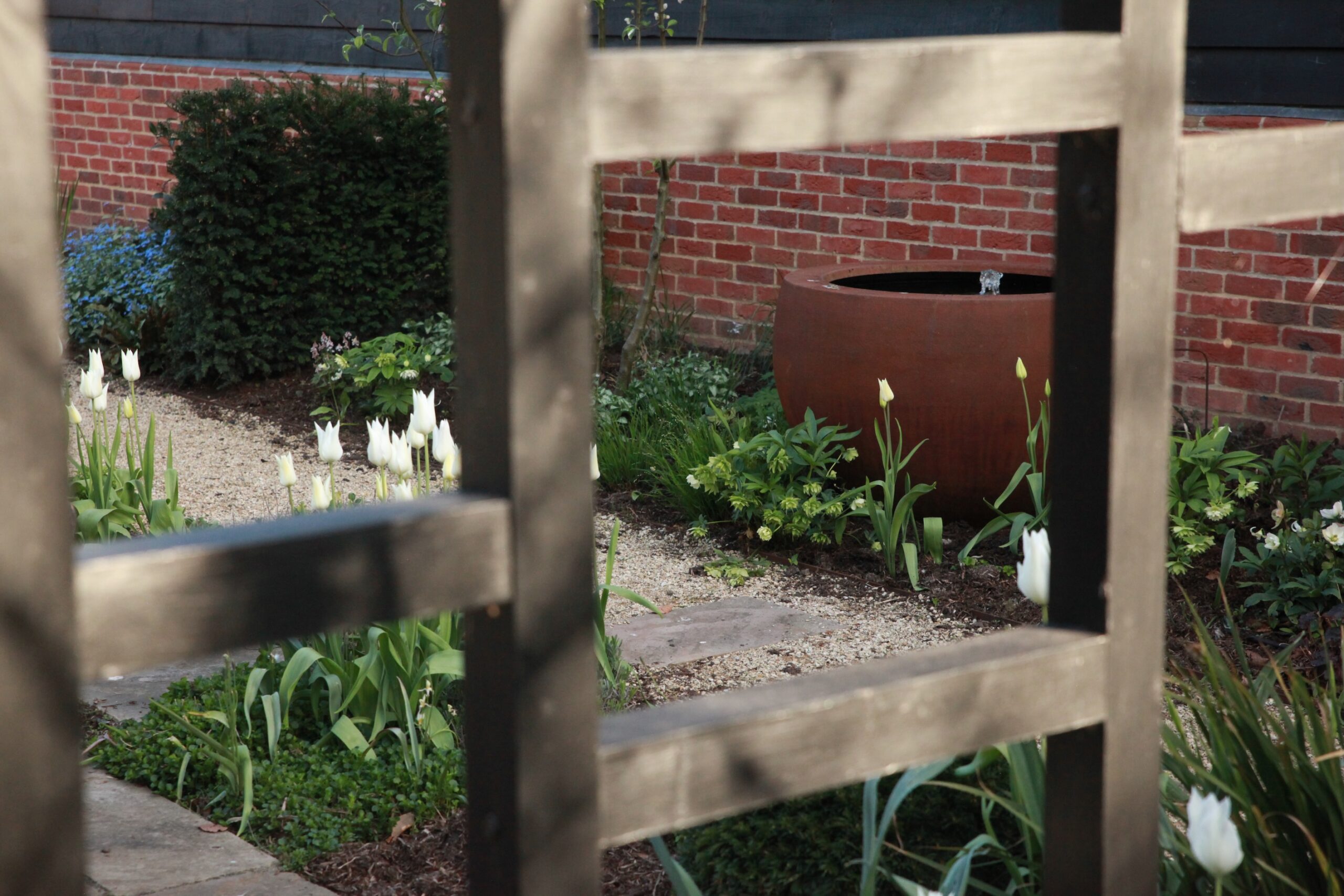
A sculptural multi-stem crab apple tree and structured yew topiary domes add year-round form and seasonal interest, while a bespoke Urbis Design water feature introduces movement and a contemporary focal point. A bespoke black-painted timber trellis subtly divides the long, narrow plot into defined zones without blocking sight-lines.
A refined white planting palette — including lavender, Erigeron and Astrantia — softens the hard landscaping with texture and seasonal colour. The result is an elegant, layered outdoor dining space that balances structure, softness and functionality.
Gravel Garden & Pétanque Court – Sustainable, Structured Design
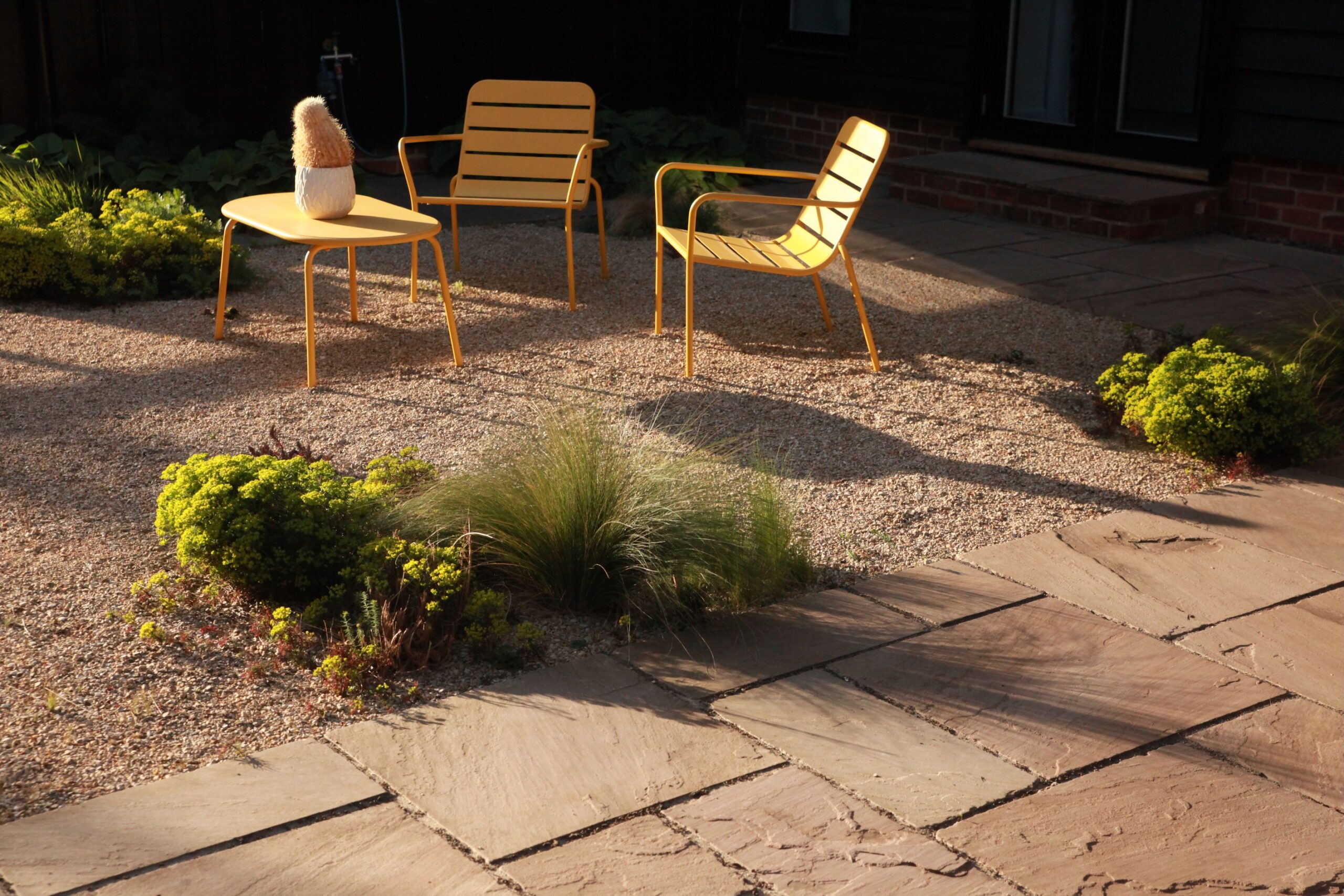
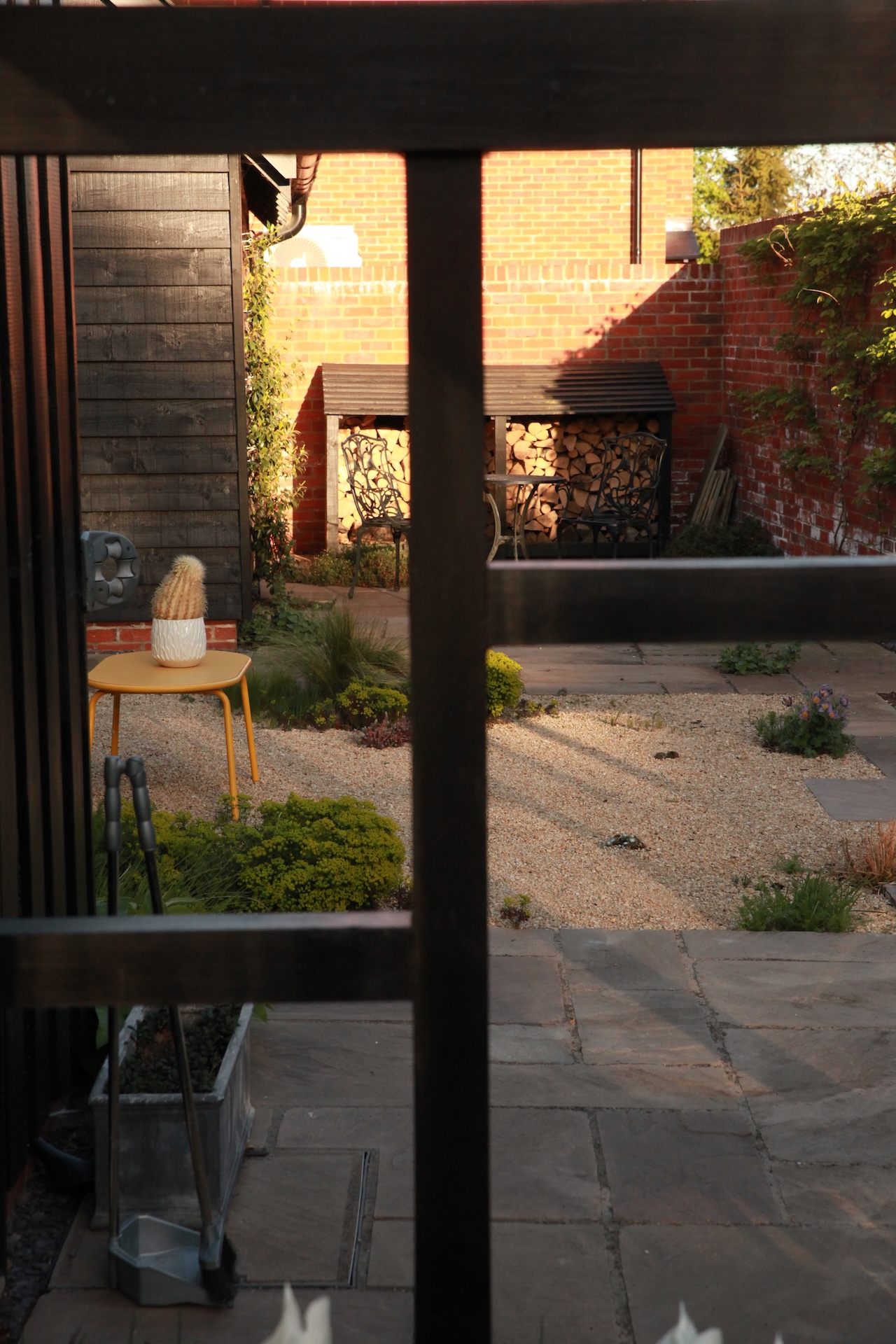
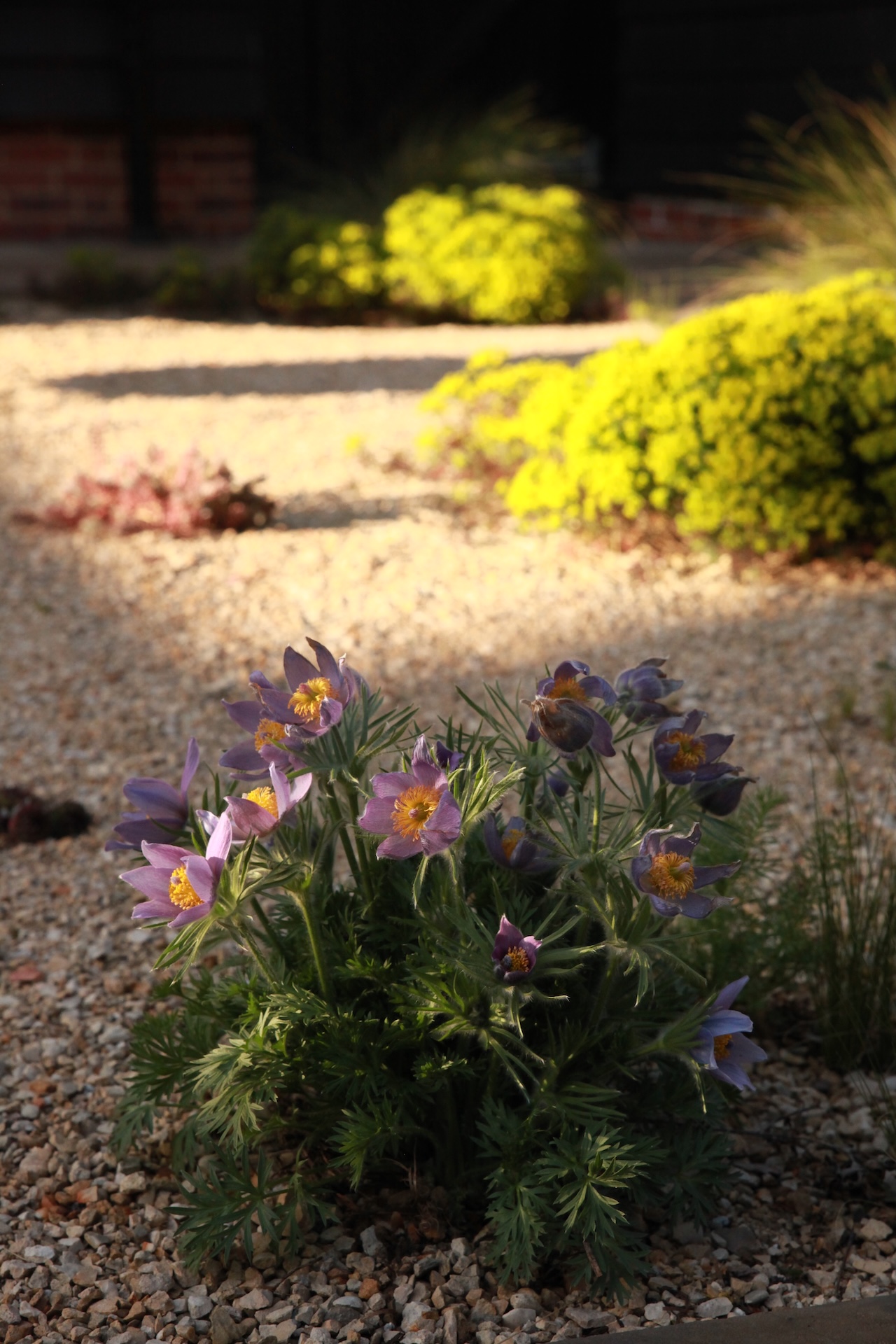
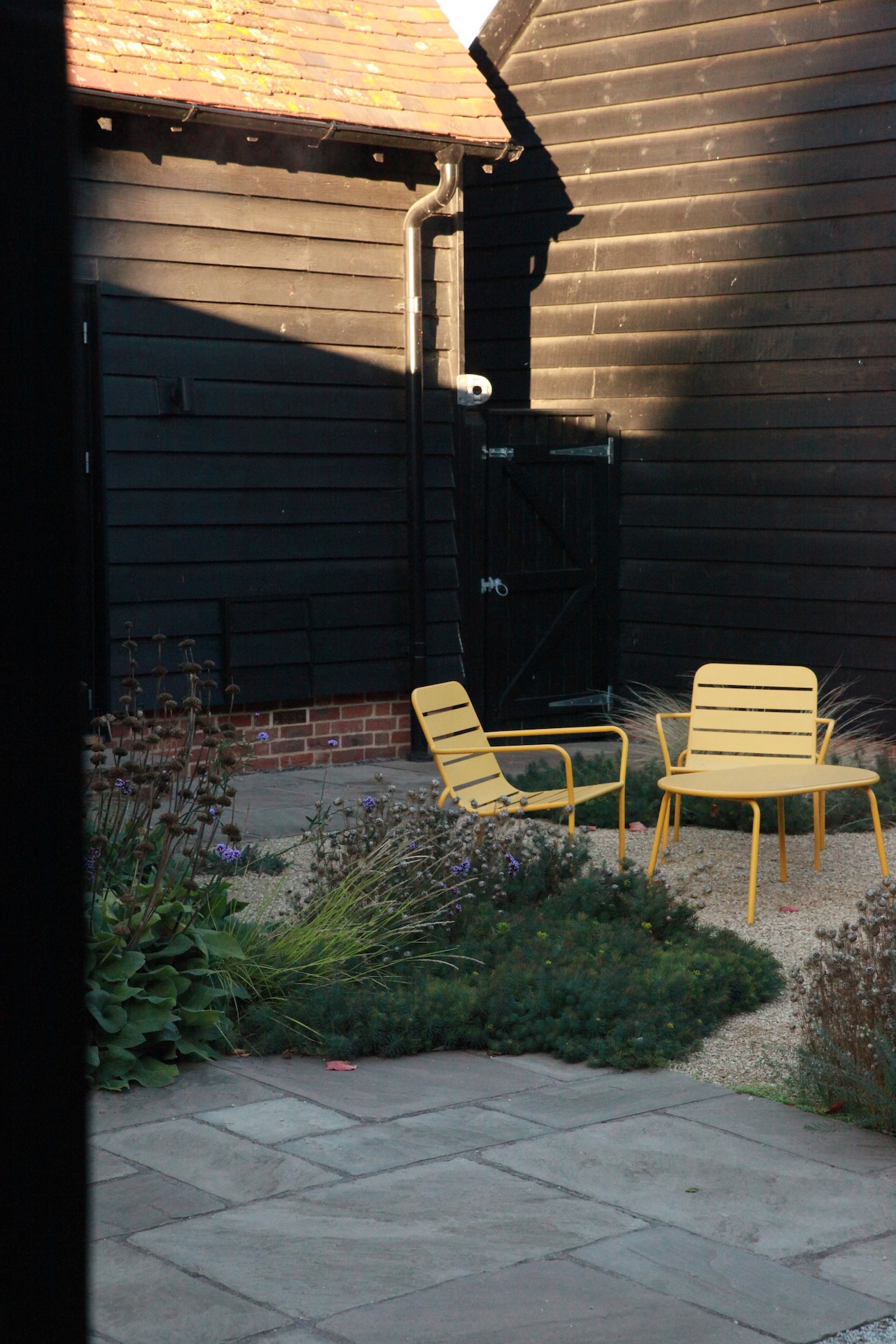
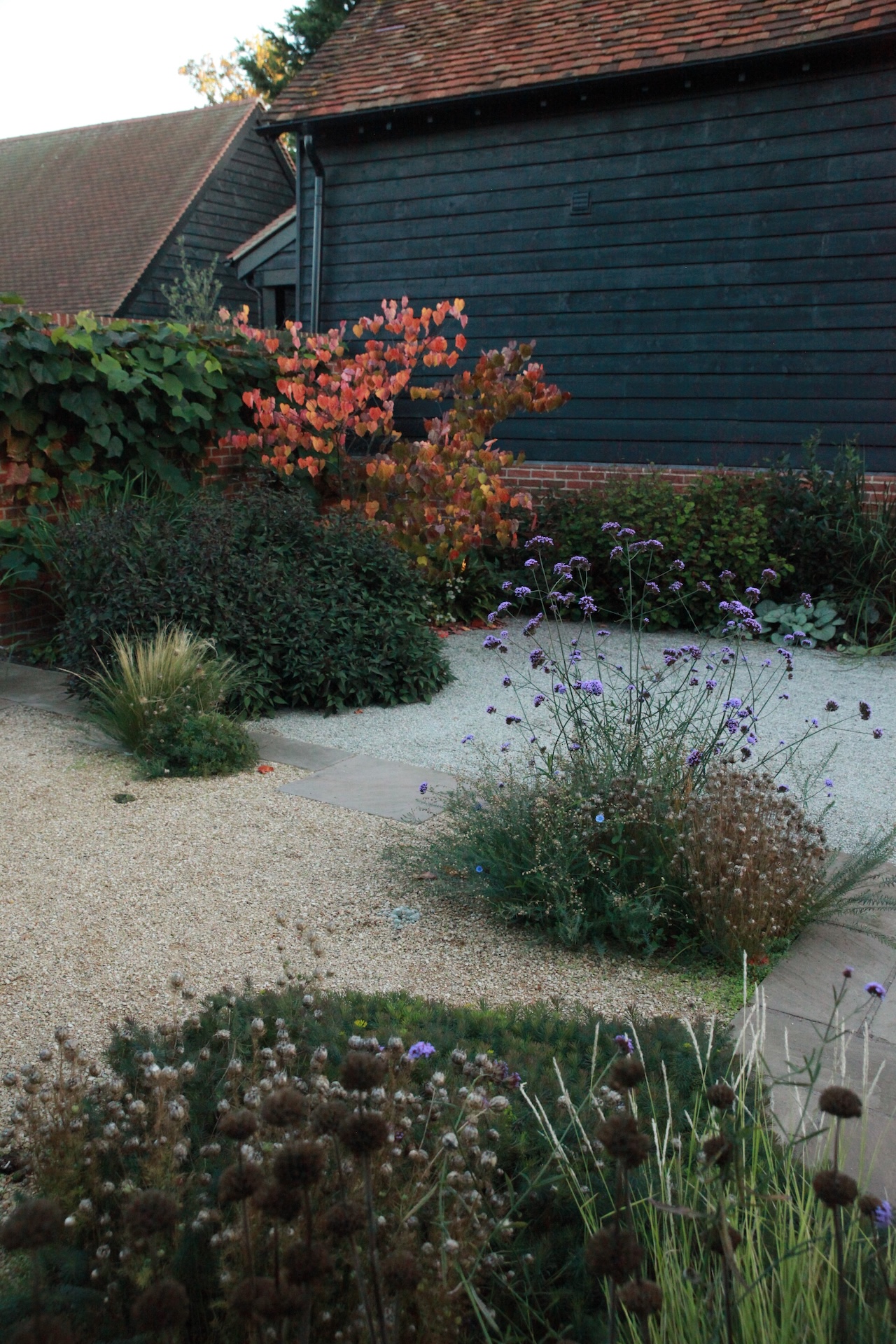
This final garden area features a contemporary gravel garden and dedicated pétanque court, adding both functionality and strong visual character. Positioned in a warm sun trap, the gravel garden was designed as a drought-tolerant, low-maintenance planting scheme that reduces irrigation while providing year-round interest.
Planting includes ornamental grasses, perennial flax, Euphorbia and resilient succulents, with Nigella over-seeded to self-sow naturally through the gravel, boosting biodiversity and softening the structured layout.
Adjacent to this space, the pétanque court introduces a sociable recreational feature. Surrounding north-facing borders were planted with shade-tolerant species such as Persicaria, Astilboides and Astrantia, providing bold foliage, structure and seasonal colour.
Together, these zones demonstrate effective garden zoning, transforming a long, narrow plot into cohesive outdoor rooms tailored to different microclimates while maintaining a unified landscape design.